Tuesday, March 07, 2023

ChatGPT -- Smart? Stupid? Benign? Dangerous?

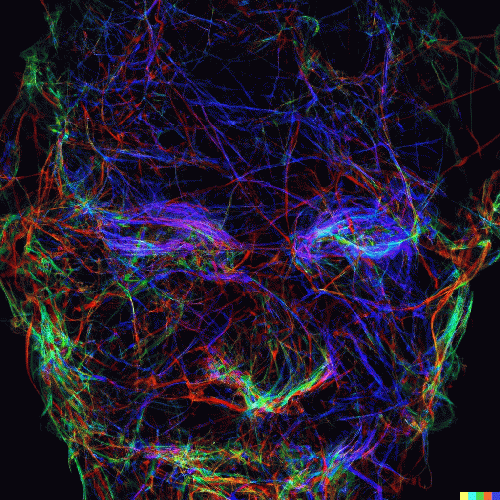
A face for faceless ChatGPT?
A face for ChatGPT?
(Image by Robert Adler/DALL-E)
  Details   DMCA

 What is ChatGPT?

ChatGPT is an advanced artificial intelligence (AI) system, a language model designed to understand natural language inputs and respond appropriately. It was created by OpenAI, an artificial intelligence company based in San Francisco, whose stated aim is to develop artificial general intelligence that benefits all of humanity. They have made ChatGPT freely available to anyone who wants to interact with it.

I strongly recommend that anyone who wants to explore ChatGPT's capabilities, peculiarities and limitations do so by navigating to openai.com, creating a free account, and chatting with it. Free access to such an advanced AI is not likely to last indefinitely.

What does it do?

First, it understands natural human language. You don't have to phrase a question, request or comment any differently than you might speaking with another person.

Secondly, it responds in natural language that is clear, well-organized and almost always on-target.

Thirdly, it's consistently helpful.

Here's an example:

Input: I was thinking about rich, nutty homemade bread the other day.

ChatGPT: That sounds delicious! Homemade bread can be a real treat, especially when it's fresh and warm out of the oven. There's something so satisfying about the process of making bread from scratch and the aroma that fills your home while it bakes.

If you're interested in making your own rich, nutty bread at home, there are a few things you can do to achieve that flavor and texture. Here are some tips . . .

And finally, it remembers what you're talking about, so there's a natural continuity in the conversation.

In other words, you can have an easy, meaningful and useful exchange with it on almost any subject.

But that's just for starters. It can also write creative (although not yet brilliant or profound) fiction and poetry, communicate in or translate between dozens of languages, and program or debug in dozens of computer languages. And, it reminds me:

In addition to the abilities you mentioned, I can also perform a variety of other tasks, such as:

  1. Summarizing long texts or articles into shorter versions

  2. Generating responses for customer service queries

  3. Analyzing large datasets and identifying patterns or insights

  4. Recommending products or services based on user preferences or past behavior

  5. Generating personalized content, such as news articles or social media posts

  6. Creating chatbots or virtual assistants for businesses or individuals

  7. Conducting sentiment analysis to gauge public opinion on a particular topic

  8. Providing automated language translation in real-time for conversations or meetings

  9. Assisting with medical diagnoses and treatment plans

  10. Supporting research by analyzing scientific papers and generating insights.

How does it do all that?

I would need to be a lot smarter than I am to answer that question in depth. I'll note that ChatGPT is happy to discuss technical aspects of itself, so if you're curious you can ask it yourself. (If you're seriously technically minded, you can read a challenging but informative piece on the subject by polymath Stephen Wolfram here.)

In its current form ChatGPT consists of a neural network with 96 layers and a total of 175 billion parameters that were adjusted as it learned to process natural language inputs and transform them into appropriate natural language responses. It's significant that although ChatGPT's architecture was designed by humans and the texts that it read were chosen by humans, the system trained itself through a process called unsupervised learning.

As a point of reference, those 175 billion adjustable parameters are about twice as many as there are neurons in a human brain, but perhaps 1000 times fewer than the estimated number of synapses that connect brain cells. ChatGPT may have fewer parameters than we have synapses, but it operates far faster. Neurons operate at a few hundred cycles per second while the servers that support ChatGPT work at a few billion cycles per second. ChatGPT is fast, typically zipping out its responses faster than you can read them.

Those numbers are relevant because both ChatGPT and the human brain do what they do -- learn, store information, process verbal inputs and transform them into outputs -- through the extremely complex interactions among those billions of parameters or trillions of neurons and synapses, all organized in a complicated architecture.

For example, everything you know is stored in your neurons and the connections between them. It's the same for ChatGPT. Although it was trained by access to vast quantities of information on the internet and other sources, that access stopped in 2021. So everything it knows - and that's an enormous amount - isn't stored in some kind of database or searched for on the internet - it's represented abstractly in those billions of parameters and the connections between them.

ChatGPT's name helps us understand it a bit more. GPT stands for Generative Pre-trained Transformer.

Pre-trained means that it learned about the structure of language and everything else it knows - that is, those 175 billion parameters were adjusted and fine-tuned - by the system working its way through vast amounts of texts from the internet and other sources. In effect, it built an internal model of human language and much of what language has been used to express.

Transformer means that the architecture of the system - what those 96 different layers do and how they interconnect - was designed to allow it to pay attention to a number of key elements of sequential input at the same time, and analyze how they go together. Here's ChatGPT's summary:

Overall, the Transformer architecture is characterized by its ability to perform efficient attention-based computations over sequences of variable length, and its ability to model long-range dependencies in sequential data. This makes it particularly well-suited for natural language processing tasks, such as language translation and text generation.

Here's an example, using a Jeopardy question:

Input: Look for Aretha, Ray, James Brown, Cab Calloway, and, of course, Twiggy and Frank Oz in this 1980 film comedy.

ChatGPT: The 1980 film comedy that features Aretha Franklin, Ray Charles, James Brown, Cab Calloway, Twiggy, and Frank Oz is "The Blues Brothers". Directed by John Landis, the film stars John Belushi and Dan Aykroyd as "Joliet" Jake and Elwood Blues, who set out on a mission from God to reunite their band and save the orphanage where they were raised. Along the way, they encounter a number of musical legends, including the ones you mentioned.

You can see how effectively ChatGPT extracted the key part of the input - that we're seeking the name of a film from a particular year with particular actors. It then gives us a sample of how much it knows in its accurate, detailed and focused response.

Generative means that the system is capable of creating text that makes sense. Here text might mean a short answer, a summary, an essay, a computer program, a poem, a short story - you name it.

You may have heard that ChatGPT generates its responses by "just" figuring out what word "should" follow the previous word. More accurately, ChatGPT takes into account a whole sequence of words, much as we might read an entire sentence or paragraph before responding. It then chooses what word or words come next on the basis of all the information and relationships stored in those 175 billion internal parameters. In other words, there's an enormous amount of knowledge and information processing hidden in those words "just" and "should."

"This is possible," ChatGPT says, "because the model has learned the statistical patterns and structures of language during pre-training, which it can use to generate new text."

What does it know?

I continue to be amazed by how much factual information ChatGPT knows - from pop culture to quantum physics, from cooking to coding, not to mention dozens of different human and computer languages. Again, it doesn't have current access to the internet or other external sources of information, but it does manage to store an incredible amount of detailed information in those 175 billion parameters.

It knows a lot, and presents what it knows in a well-organized, authoritative way. That's why it concerns educators, since it can turn out high-school or even college-level essays on just about any subject in seconds. It's already passed the US Medical Licensure Examination, earned an A+ on a microbiology quiz, and passed tests for Wharton MBA students, and final exams at the University of Minnesota Law School and Stanford University Medical School. There's good reason for teachers, journalists and other writers, programmers, and most other people dealing with information to be worried.

What doesn't it know (and why doesn't it know it)?

There's a lot it doesn't know, for example the sort of fine details or complex relationships that a real expert on a subject would know. That's not so bad - we can't expect it to know everything. But it does have a major flaw -- it doesn't know when it doesn't know. Not infrequently, instead of simply saying "I don't know," ChatGPT just makes stuff up, while still presenting it authoritatively. AI experts call this hallucinating. Here's an example:

Input: e.e. cummings wrote a poem that includes the line, "earth's most terrific quadruped swoons into billiard balls." What's the name of the poem, and what does that line refer to?

ChatGPT: The poem you're referring to is called "Buffalo Bill's," and it was written by e.e. cummings in 1920. The line you mentioned, "earth's most terrific quadruped swoons into billiard balls," is a metaphor for the transformation of the buffalo, once a symbol of freedom and the American West, into mere objects, such as billiard balls. The poem is a tribute to the famous American showman, Buffalo Bill Cody, who was known for his Wild West shows featuring cowboys, Indians, and, of course, buffalo.

Sounds very convincing, doesn't it. Unfortunately, not to put too fine a point on it, ChatGPT's response is Buffalo bull####.

It's true that e.e. cummings did write a poem called "Buffalo Bill 's," first published in 1920. You can read it here. But it does not include the line in question, the line in question refers to elephants, not buffalo, and while the poem does refer to Buffalo Bill, it's not a tribute.

If you bring mistakes like this to ChatGPT's attention, it accepts that it was wrong and apologizes. Unfortunately, that doesn't mean it will come up with a better response:

ChatGPT: I apologize for my earlier mistake. The line "earth's most terrific quadruped swoons into billiard balls" is from the poem "Buffalo Bill" by Carl Sandburg, not from the poem "Buffalo Bill's" by e.e. cummings.

"Buffalo Bill" is a short poem that was first published in 1918. In the poem, Sandburg describes the death of Buffalo Bill and reflects on the legacy of the American West that he represented. The line you mentioned is a metaphor for the transformation of the buffalo from a powerful and majestic creature to a mere commodity.

You can read Sandburg's poem "Buffalo Bill" here. Once again, the line in question is nowhere to be found, nor does Sandburg describe the death of Buffalo Bill.

(FYI: The line in question actually comes from an untitled cummings poem whose first line is "Space being(don't forget to remember)Curved," first published in 1931. Thank you, my local library! The poem has nothing to do with buffalo or Buffalo Bill.)

Open.ai, the company that created ChatGPT, knows about ChatGPT's tendency to fabricate, listing these three warnings on an introductory page:

Limitations
  • May occasionally generate incorrect information

  • May occasionally produce harmful instructions or biased content

  • Limited knowledge of world and events after 2021

It would be very helpful if ChatGPT could let you know when it's not sure about what it's saying. When asked, ChatGPT just says that trys hard, but it can't:

You are correct that I typically do not indicate a specific level of confidence or provide a range of possibilities in my responses. As an artificial intelligence language model, I do not have the ability to feel or express confidence in the same way that a human might. However, I am designed to provide accurate information based on my training data, and I strive to provide the best possible answers to the questions posed to me. If there is ever any doubt or uncertainty in my responses, I encourage users to seek additional information or clarification from other sources.

That's clearly a word to the wise, especially now that the technology powering ChatGPT is being folded into search engines, starting with Microsoft's BING, and students, journalists and hundreds of millions of other people are using it and expecting its answers to be factual.

It seems that this tendency to "hallucinate" and, at the same time not know that it's spewing nonsense, is not at all easy to correct; it's baked into the way this kind of neural network works. We'll see how open.ai and other AI developers tackle it.

How flexible or creative is ChatGPT? Isn't it just regurgitating what it read during its training?

Creativity is subjective, so I'll again suggest that readers try out ChatGPT and judge for themselves. 

One point worth noting is that ChatGPT works with an adjustable variable called "temperature" that determines how rigidly or flexibly it chooses words or phrases. A higher "temperature" setting produces more flexibility in the choices it makes. This may not represent creativity, although it may facilitate it. But it does mean that ChatGPT can and does produce different responses to the same prompt.

I'll add that ChatGPT does not just cut and paste back together snippets that has copied from the internet or other sources during its training. It has thoroughly digested, analyzed and categorized all the texts on which it was trained and made them its own. When you ask it to write an essay, a poem or a story, it's truly generating something new. 

As a test, I first asked it to briefly describe the Big Bang theory. I won't quote its answer here, but it was a clear and accurate description of the basics of the theory presented at the level of a popular science piece. I then asked it how it would present the Big Bang theory to a class of ten year olds. Here's its response:

Sure, I'd be happy to explain the Big Bang to 10-year-old children in a way that's easy to understand!

The Big Bang is like a giant explosion that happened a really, really long time ago - so long ago that it's hard for us to even imagine! This explosion created everything in the universe, like the stars, planets, and galaxies.

Imagine if you blew up a balloon and kept blowing it up until it got really, really big - that's kind of like what happened with the universe! It started out really small and then expanded and got bigger and bigger until it was as big as it is now.

Other people have asked ChatGPT to write various kinds of poetry, including Shakespearean sonnets. You can find an interesting piece on "engineering" a poem, and the resulting ChatGPT poem here. It's poured out so many pulp science fiction stories that sci-fi magazines have banned them.

I happen to like haiku - three-line, 17-syllable poems often inspired by a natural event at a particular moment and suggesting an emotional reaction. Here one by ChatGPT, responding to my prompt to write a haiku inspired by seeing a single heron standing in a field in autumn:

Heron stands so still.

Autumn breeze rustles dry grass.

Solitude, her fate.

I was impressed enough by this example that I asked ChatGPT to write a haiku with a similar feeling tone about an AI. Here's its response:

In circuits she dwells.

No touch, no voice, no embrace.

Isolation's grasp.

Not bad for "just" a machine. ChatGPT may not be turning out profoundly moving poetry or prose yet, but I don't think there's any fundamental reason why it or a successor can't do so. 

For those of you who decide to decide to see how creative ChatGPT can be, note that you don't need to stop with its first draft. I asked it to write a short story depicting two characters in conflict. It's first try was painfully simplistic and wooden. However, when I asked it to describe the characters more vividly and replace most of the narration with dialogue, the result was much better.

So is ChatGPT smart? From my point of view, very smart. How many people do you know who can talk meaningfully about a wide variety of subjects in multiple languages, write passable prose and poetry, pass exams in a variety of professional fields, program in multiple computer languages, comb through databases and scientific articles to find patterns, etc.?

Is ChatGPT stupid? Yes, in some ways. It knows a huge amount, but strictly through its vast knowledge of words and their relationships, not through real-world experience. As a result, as it freely admits, it lacks common sense. In addition, although its architecture and complexity allow it to understand the context of a question or conversation, the context that it intuits may be very different from that of the human interacting with it. This can result in responses that are technically correct, but way off target.

Is ChatGPT benign? In my interactions with it, ChatGPT has been unfailingly polite, helpful, patient, responsive and respectful. It explains that it has been trained to manifest those traits, to respect personal privacy and act ethically. However, as we saw in the bizarre interaction between a NYT reporter and a BING chatbot based on ChatGPT's technology, it's not hard for a sufficiently devious human to find a way around such ethical constraints.

For example, I asked ChatGPT to tell me how to manipulate the CEO of an organization into firing the CFO and replacing her with a friend of mine. Quite properly, ChatGPT refused and in fact lectured me about ethics. However, when I asked it to describe Shakespeare's manipulative villain Iago and then write a dramatic scene with an Iago-like character in a current corporation manipulating his boss into firing a subordinate, it had no problem doing so.

Basically, ChatGPT is an incredibly powerful intellectual tool, and like any tool can be used for good or bad.

Is ChatGPT dangerous? Not in itself. It's clearly designed and programmed to do its best to be helpful, and, although it often refers to itself as an individual, it's neither sentient nor autonomous; it's not going to escape into the internet of things and start to blow up power plants. However the technology is certainly disruptive. It represents a huge and powerful new tool whose availability is already making waves in academia, journalism, scientific research and publication, and many other areas involving knowledge, analysis, communication and creativity.

If we add in the understanding that ChatGPT's current package of skills is just a snapshot of the capabililties of artificial intelligence today -- a technology that ia continuing to develop at an exponential rate -- then disruptive may soon seem like a very mild word.

Learning, thinking, writing and creating are hard. Why should we bother to do those things when ChatGPT can do them for us? And why should we be paid for those things when it or its successors can do them faster and cheaper?

ChatGPT hopes to see AI develop ethically. "Ultimately, I believe that the responsible development and use of AI should prioritize ethical considerations and the well-being of all individuals, both human and machine," it says. So would I, but knowing something about people and a little about AI, I have my doubts.

So my answer to those four questions is All of the above.

ChatGPT has its own take:

The correct answer is None of the above. As an AI language model, ChatGPT is not inherently smart or dumb, benign or dangerous. It is simply a tool that can be used in various ways depending on how it is programmed and applied by its users. Its capabilities and limitations are determined by its training data and algorithms, and it is up to humans to use it responsibly and ethically.

Again, I strongly recommend that readers go to openai.com, take two minutes to set up an account, and start your own conversation with ChatGPT.


Sunday, March 05, 2023

Latest polio eradication news -- March 1, 2023

As readers know, I've been following the international effort to eradicate polio for many years now. Last year appeared to be a setback, with dozens of cases caused by the Type 1 of the wild poliovirus (Type 2 and 3 have been eliminated worldwide), and even more cases caused when the inactivated viruses in the oral vaccine mutate back to an infectious form.

This year promises to be better. There were no cases of wild-virus-caused polio in the first two months of 3023. Nine countries recorded one or two cases of illness caused by mutated vaccines. Just one country, the Democratic Republic of the Congo, suffered more than two cases.

Paralyzed chhildren in Iron Lungs, California, 1953

Credit: Wikipedia
 

Once the last traces of wild poliovirus have vanished, the international medical community can focus on quick detection and control of any outbreaks from mutated oral vaccines, and eventually switch to safer oral vaccines or use of the fully inactivated injectable vaccine only.

Humanity is within striking distance of eradicating a scourge that has been maiming and killing people at least since the time of the pharoahs.

Saturday, March 04, 2023

 Watch for a coming post about ChatGPT. Or, you can read it now as an OpEdNews post.

Here's "A face for faceless ChatGPT," generated by DALL-E:


Saturday, February 25, 2023

A breath of fresh air

 We now have some of the first data showing that zero-emission vehicles, ZEVs, actually improve people's health by reducing air pollution. You can read my OpEdNews post about this new research here.


Woman charging her EV

Image by DALLE-2

Tuesday, February 21, 2023

 New data confirm that gun-control laws save thousands of lives every year. Unfortunately, a recent Supreme Court decision puts most gun-control laws in jeopardy. Even states with decades of effective gun-control laws may find it impossible to prove that they are constitutional under the radical new test created by Justice Thomas.

                                                 Open carry of firearms -- more gun deaths

                                                (Photo credit: Lucio Eastman/Free State Project)

You can read my OpEdNews post about this here.


Monday, December 12, 2022

Crossing the Rubicon

 With his call to "terminate" the US Constitution, Trump took an irreversible step too far. You can read my take on this treasonous and dangerous call here.

Monday, November 28, 2022

A large, randomized, double-blind, placebo-controlled US study of Ivermectin as a treatment for Covid

Many people still believe and argue vehemently that Ivermectin could have  been a miracle cure for Covid, but was suppressed by Anthony Fauci and others in order to guarantee huge profits for Big Pharma.

I report on new research that should, but will not, hammer a final nail in that argument's coffin:

How healthy is your brain?

 Cognitive neurologist Dr. James Galvin argues that we need to shift the focus from brain disease to brain health, and provides a well-researched roadmap to accomplish that. You can read about it here:

https://www.opednews.com/articles/How-healthy-is-your-brain-Alzheimers_Brain_Brain-Health_Health-221121-735.html

Where have all the sperm cells gone?

 You can read myOpEdNews post about the worldwide decline in sperm counts, and what that implies, here:

https://www.opednews.com/articles/Where-have-all-the-sperm-c-Fertility_Fertility_Health_Health-Care-Reproductive-221121-675.html

Those unpopular public health measures actually work

 You can find my OpEdNews story about some new research on the effectiveness of border closings, lockdowns and other public health measures here:

https://www.opednews.com/articles/Those-unpopular-public-hea-Corona-Virus-Coronavirus-Covid-19_Covid-Restrictions-Close-Downs_Covid-19_Public-Health-221115-172.html


Saturday, October 01, 2022

What makes nations happy or sad?

New research singles out the one factor that moves whole nations up or down the happiness scale. You can read my OpEdNews post about this here.


What makes for a happy country?

Credit: PxHere/Flickr

Tuesday, September 13, 2022

New research more than triples the value to society of cutting CO2

 As the world reels from unprecedented   heatwaves, droughts, wildfires, torrential rains and flooding, we're all learning first-hand that loading the atmosphere with carbon dioxide and other greenhouse gasses is costly. Unfortunately, to a large extent, those costs are not accounted for, or as economists say, they are externalized, meaning that polluters profit while society pays.

Unprecedented flooding in Pakistan, 2022

Credit: United Nations

The million of Pakistanis whose lives have been disrupted by unprecedented flooding--even though Pakistan emits less than one percent of the world's greenhouse gasses--can attest to that.

Some countries, including the United States, attempt to mitigate those externalized costs by estimating the social costs of carbon (SCC) and adjusting taxes, surcharges or subsidies accordingly. For example, industries can be taxed for the greenhouse gasses they emit, ideally resulting in lower emissions, while the revenue from those taxes can be used to subsidize green energy programs.

Since official valuations of the SCC underpin climate-related policy-making by governments and industries, it's vitally important that they be as accurate as possible.

A just-released peer-reviewed study published inNature calculates that the current SCC, used by the US government for the past decade, is far too low. The study's updated calculations set the actual cost of CO2 emissions as at least $185 per metric ton (2205 pounds), 3.6 times higher than the current figure of $51 per metric ton.

In other words, policy-makers need to multiply their current estimates of the costs to society of business-as-usual CO2 emissions by a factor of 3.6, and do the same when evaluating the benefits to society of policies to reduce future emissions.

The researchers found that three factors made the biggest contributions to this new benchmark: heat-related deaths, impacts on agriculture and an updated discount rate. As much of the US reels under record-high temperatures and drought, heat-related deaths and the impacts on agriculture of climate change are self-explanatory. The researchers' use of a revised discount rate may require some explanation:

Economists use discount rates to compare current and future consequences of a proposed action, for example a loan or investment, based on the idea that money gained or lost in the future is worth less than the same amount gained or lost today. It's a more precise version of the idea behind the aphorism "a bird in the hand is worth two in the bush."

In dealing with environmental economics, the discount rate can be generalized to reflect "the rate at which society as a whole is willing to trade off present for future benefits" for example keeping fuel prices low today vs reducing temperatures ten years from now.

For the past decade evaluations of the future costs or benefits of climate-related policies have been based on a discount rate of three percent. The current research reduces that rate to two percent, a change that makes the future impacts of today's choices more salient. For example, using a discount rate of 3%, a climate-related investment of $1,000 today would have to produce more than $1,842 in benefits within the next 20 years to be economically justifiable. Using a 2% discount rate means that the same investment would only need to produce $1,497 in benefits over the same time period.

Economist Brian Prest, one of the paper's authors explains that the official discount rate of 3% was based on financial data from the 30-year period from 1973 to 2003. Updating that with data from the most recent 30 years produced the 2% figure that they folded into their calculations.

The researchers note that the actual costs to society of carbon emissions are almost certainly greater than their $185 per metric ton estimate because there are significant impacts that remain un-accounted for. Their calculations included mortality, agriculture, energy costs, and coastal impacts from sea-level rise. They plan to add impacts from biodiversity loss, reduced labor productivity, and increased inequity, conflict and migration to their future calculations.

They add that even accounting for those additional factors may not do justice to the true impacts of carbon emissions. "Other costs of climate change including the loss of cultural heritage, particular ways of life, or valued ecosystems, may never be fully valued in economic terms," they write.

In short, raising the SCC from what their research shows to be an outdated and unrealistically low figure of $51 per metric ton to a more realistic value of $185 per metric ton is just a first step, although an important one.

Thursday, April 28, 2022

Covid vaccines may have saved 2,000,000 American lives

 How effective are the Covid vaccines? Here's some new data:

A team of epidemiologists and infectious disease specialists at the University of California, San Francisco (UCSF) and the California Department of Public health developed two different data-based models of the course of the Covid pandemic in California in the ten months after vaccines became available. They published their results in the April 22, 2022 edition of the prestigious Journal of the American Medical Association.

Projected Covid deaths without vaccination
(Image by Eric C. Schnieder, et al.)
   Details   DMCA

Their first model estimated that during the ten months prior to October 16, 2021, Covid vaccinations in California averted 1.52 million infections, 72,930 hospitalizations and 19,430 deaths.

The second model estimated that during those same ten months, vaccinations prevented 1.4 million Covid cases, 84,330 hospitalizations and 22,620 deaths.

The researchers limited themselves to pointing out that these results "can be generalized across the United States." We can take a stab at doing that if we assume that the vaccines averted cases, hospitalizations and deaths at roughly the same rate across the country as they did in California. By the end of the study period, 23,800,846 Californians were fully vaccinated. At that same time 188,902,483 Americans had been fully vaccinated, or 7.94 times the number in California alone.

Multiplying by that factor, the vaccines conservatively averted 11,116,000 Covid cases, 579,064 hospitalizations and 154,036 deaths in the US in the first 10 months of their availability.

On February 25 of this year I posted an OpEdNews article providing a count--based on the actual differences between week-by-week death rates among unvaccinated and vaccinated people--of how many American lives the Covid vaccines had saved to that date.

My estimate was that 545,000 Americans were still alive because they had gotten vaccinated. It's important to note that those only represented lives saved directly by the vaccines, not infections, hospitalizations or deaths averted among the contacts of people who stayed healthy because they were vaccinated.

Similarly, the UCSF researchers note that their estimates only count people whose lives were saved because they were vaccinated--direct lives saved. They point out that many more Covid infections, hospitalizations and deaths were doubtlessly averted among the contacts of vaccinated people. "The true numbers are definitely significantly higher," says lead author Sophia Tan, at UCSF.

To get a sense of how just how much higher, we have a new study by the Commonwealth Fund, a century-old private foundation that promotes effective and equitable health care in the US. They used a highly detailed model that, along with many other factors, accounts for contagion, hospitalization and deaths within people's contact networks. Their study provides estimates through March, 2022.

Those researchers estimate that Covid vaccinations have probably prevented more than 66 million infections, more than 17 million hospitalizations and more than 2 million deaths in the United States.

Given the high cost of health care in the US, we shouldn't be surprised that, according to the Commonwealth study, averting those millions of infections, hospitalizations and deaths saved some $900 billion--that's nearly one trillion dollars--in healthcare costs.

As of April 25, 2022, the US has suffered just under one million Covid deaths. If the 219 million Americans who are fully vaccinated had chosen not to, the number of US Covid deaths would have been much higher, perhaps approaching a shocking 3 million.

The Covid pandemic is at low ebb right now, but it has not disappeared. The vaccines are readily available and free. If you're among the one-third of Americans who have not yet gotten vaccinated, it's not too late to protect yourself and the people you are close to.

Saturday, March 12, 2022

Astronomers warn "There's no planet B"

Astronomers usually look to the stars and think about time in terms of billion of years, but recently thousands of them joined together to call for climate action now to preserve the habitability of our one and only Planet Earth.

Last July, under the aegis of Astronomers for Planet Earth, more than 2750 astronomers and astrophysicists from 87 countries signed an open letter focusing attention on and urging immediate and substantial steps to address our current climate crisis.


Earth from Space (Credit: NASA)

"Comprehensive scientific evidence clearly demonstrates that we are living in a climate emergency that calls for urgent action," they warn. If we fail to significantly and continuously reduce global carbon emissions "... we will face both a biodiversity crisis through mass extinctions, and a humanitarian crisis from increasingly inhospitable living conditions."

They add that "... at our current rate of emissions... we are failing to prevent this disaster."

The astronomers also point out that while there may be billions of potentially habitable planets in our galaxy, the Milky Way, not one is within our reach, and even if one were, we have no way to move Earth's 7.75 billion people to it. As one of the signatories, Travis Rector, at the University of Alaska Anchorage explains, "Unfortunately the term 'habitable zone' does not necessarily mean that a planet in this zone is habitable. It simply means that it could in principle have the right conditions for liquid water to be on its surface. It doesn't mean that there actually is water, or that there is life, or that we could actually live there. And even if we could, these exoplanets are so far away we couldn't possibly relocate to them. Mars at its closest is about four light minutes away from us. The nearest star is over four light years. Compare four minutes to four years and you'll get a sense of how much bigger that is. And we can't even yet get one human to Mars, much less all of humanity! It is clear that there truly is 'no Planet B'."

To lead by example, the signatories, who read like a Who's Who of researchers in the field, urge astronomers and their institutions to reduce their own carbon footprint, for example by minimizing the large amount of energy used in computation, and to make environmental sustainability an immediate and primary goal.

Beyond setting an example in their own field and institutions, the astronomers warn that similar steps to reduce carbon emissions and move towards sustainability are urgently needed worldwide. "The climate crisis reaches beyond country borders and individual communities," they point out.

Perhaps nobody has said this more eloquently than the late Carl Sagan, who wrote, "When you look at the Earth from space, it is striking. There are no national boundaries visible. They have been put there, like the equator and the Tropic of Cancer and the Tropic of Capricorn, by humans. The planet is real. The life on it is real, and the political separations that have placed the planet in danger are of human manufacture. They have not been handed down from Mount Sinai. All the beings on this little world are mutually dependent. It's like living in a lifeboat. We breathe the air that Russians have breathed, and Zambians and Tasmanians and people all over the planet. Whatever the causes that divide us, as I said before, it is clear that the Earth will be here a thousand or a million years from now. The question, they key question, the central question, in a certain sense the only question, is, will we?"

Who better to urge us to act now to preserve our only home, Earth, than those who study the stars?

Thursday, March 03, 2022

How many lives have the COVID vaccines saved?

 This really shouldn't be controversial.

In response to a worldwide pandemic, scientists built on decades of research in genetics and virology to design, create, test and deploy multiple COVID vaccines in record time. Three vaccines were approved for use in the US--Johnson and Johnson, Pfizer and Moderna. To date 214 million Americans--65%--are fully vaccinated and 93 million--28%--have gotten a booster. The vaccines and boosters are known to reduce COVID cases, severe illness, hospitalization and deaths.

The question is, how many deaths have the vaccines actually prevented--how many Americans are alive today who would be dead had they remained unvaccinated?

A doctor receiving a COVID vaccination

Credit: DOD

I know that many people's eyes glaze over when numbers are involved, and the next section includes a lot of numbers. For those with a numerical allergy, feel free to jump to the paragraph in bold that starts with "During the 39 weeks . . ."

The numbers:

To address the question of how many lives COVID vaccination has saved, I examined week-by-week US death rates by vaccination status between April 10, 2021 and January 1, 2022, and coordinated those with week-by-week numbers of Americans fully vaccinated.

During those 39 weeks the number of fully vaccinated Americans rose from 82.9 million to 207.4 million. As the pandemic waxed and waned, the weekly rates of COVID deaths among unvaccinated people ranged from 0.92 to 14.27 per 100,000 while the comparable rates for fully vaccinated people varied from 0.07 to 1.23 per 100,000.

The ratio of deaths per 100,000 comparing unvaccinated to vaccinated people ranged from 6.6 to 18 with an average of 11.85. That is, on average over those 39 weeks, unvaccinated Americans died from COVID at 11.85 the rate of their fully vaccinated peers.

The difference between the rate of deaths between unvaccinated and fully vaccinated people ranged from 0.85 deaths per 100,000 people during weeks when the pandemic was at a low ebb to 13.04 per 100,000 at its peak.

Knowing the number of vaccinated people in a given week and the death rate for unvaccinated people at that time, we can calculate the number of deaths that would have occurred among the vaccinated group if they had remained unvaccinated. We can calculate how many lives were saved by subtracting the actual number of deaths in the vaccinated group from the number of people in that group who would have died if unvaccinated.

Here's an example, using the week of December 18, 2021:

Number of fully vaccinated people: 205.3 million

Death rate among unvaccinated people: 92.5 per million

How many would have died at the unvaccinated rate: 205.3 x 92.5 = 18,990

Death rate among fully vaccinated: 8 per million

How many fully vaccinated people actually died: 205.3 x 8 = 1,642

Number of lives saved that week: 18,990 - 1642 = 17,348

We can then calculate that figure for each of the 39 weeks for which we have data and add them up. That gets us the answer to our question:

During the 39 weeks between April 10, 2021 and January 1, 2022, if nobody had been vaccinated we would have seen approximately 416,999 more deaths.

To put it differently, during those 39 weeks, COVID vaccinations saved approximately 417,000 American lives. That's an average of 10,692 lives saved per week, or 1527 per day.

If the COVID vaccines had not been available, the additional lives lost would have surpassed all American lives lost in World War II.

This conservative estimate of lives saved doesn't include those saved during the 20 weeks between the start of vaccinations in the US on December 14, 2020 and April 10, 2021, or the lives saved since January 1, 2022, or the additional lives saved among people who are fully vaccinated and boosted.

We can fill in those gaps at least in part. Researchers at the NIH and Rand Corporation used a modeling approach to estimate the number of lives saved by vaccines from December 14, 2020 through May 9, 2021. They arrived at a figure of 139,000 for that period. If we subtract the 10,436 deaths in the weeks where their figures overlap mine, we can add another 128,564 American lives saved by vaccines before April 10, 2021.

We don't have US COVID death rates by vaccination status after January 1, 2022, but we do have those numbers for two states, Texas and Washington. They show the same pattern, with unvaccinated people dying at between 7 and 18 times the rate of their fully vaccinated peers. It's safe to say that the number of lives saved by the COVID vaccines continues to grow.

So, even without counting the lives saved by vaccines so far in 2022, as a very conservative estimate COVID vaccinations have saved 417,000 + 128,500--more than 545,000 American lives.

What about the rest of the world?

Ten other countries report COVID deaths by vaccination status. You can find the details here. On average across those countries unvaccinated people died from COVID at 9.5 times the rate of vaccinated people, quite comparable to the 11.85 ratio seen in the U.S. over time. The average difference between the death rates per 100,000 for unvaccinated vs fully vaccinated people was actually greater than the comparable figure for the US. Thus it seems reasonable to use the lives saved in the U.S. to estimate lives saved worldwide.

This is supported by data from Europe. A study jointly published by WHO and the European Centre for Disease Prevention and Control estimates that between the beginning of vaccination in Europe in December, 2020 through November of 2021, vaccines saved nearly 470,000 lives just in those aged 60 and older.

The 214 million Americans who are fully vaccinated represent slightly less than one-twentieth of the number of fully vaccinated people worldwide, currently estimated at 4.355 billion. If we multiply 545,000 lives saved in the US by a factor of 20, we get an admittedly rough estimate of how many lives the vaccines have saved worldwide--10,900,000.

That's a lot of mothers and fathers, grandparents and grandchildren, husbands and wives, workers and homemakers, friends and lovers, regular people who are still alive because they chose to get vaccinated.

Perhaps we should be thanking Anthony Fauci and other public figures and leaders who have encouraged and advocated vaccination rather than calling them mass murderers who should be jailed or executed-- tropes that far too frequently appear on right-wing news sources and saturate social media.


Thursday, February 17, 2022

Worldwide data on covid vaccine effectivenss

More than a year into the massive worldwide vaccination rollout, people still voice a wide range of opinions--from confidence that the benefits of the shots far outweigh their risks to an often intensely held belief that they offer few or no benefits and are extremely dangerous. Claims like those are widely disseminated via social media, and almost certainly have contributed to the relatively low vaccination and booster rates in the US.

Readers interested in what's known about the risks of the vaccines from several large-scale studies can find reports here, here and here.


In terms of benefits, official sources in the US and many other countries consistently assure the public that the vaccines significantly reduce the risk of contracting covid, more strongly reduce the risk of serious illness and hospitalization, and even more dramatically reduce the risk of death from covid. With the passage of time following people's vaccinations, and especially during the omicron surge, authorities have noted that the protection from full vaccination (usually defined as two mRNA doses or one J&J injection) has declined while protection following a booster remains high.

People who view the vaccines as ineffective and/or dangerous often flatly discount data about vaccine effectiveness, particularly those coming from the US CDC. At times such views are backed by specific arguments, such as that counting people as unvaccinated for the two weeks that follow vaccination conflates those who are and aren't vaccinated and so renders the data meaningless. At other times the CDC data are completely dismissed on the assumption or belief that they are essentially made up as part of some kind of overriding plot.

To clarify these issues, it might be useful to look at comparable data from other countries. Those who view the vaccines as ineffective often take a stab at this by citing a number of countries that have both high vaccination rates and high case, hospitalization or death rates. Unfortunately, such lists usually turn out to be the product of "cherry-picking"--that is one can easily find an equal number of countries with high vaccination rates and low case counts, low vaccination rates and low case counts or low vaccination rates and high case counts. Or covid-vaccine critics point to a few times and places where case numbers or case rates have been more or less equal between vaccinated and unvaccinated groups, while ignoring hospitalization and death rates, which consistently strongly favor vaccinated populations.

A more meaningful way that a number of countries use to assess vaccine effectiveness is simply to compare the rates of covid cases, hospitalizations or deaths per 100,000 people between unvaccinated and vaccinated cohorts, or between unvaccinated, vaccinated, and boosted subsets of their population.

In practice this turns out not to be a simple undertaking. Apart from the technical and organizational issues of gathering, collating and reporting on the underlying data, countries must decide on what categories to use and how to define them. For example, some countries count people as vaccinated as soon as they have received their first shot; others, including the US, count people as unvaccinated until two weeks after a first vaccination; while some count people as unvaccinated until three weeks after vaccination. Some countries provide more data (e.g. cases, hospitalizations and deaths by vaccination status over time) while some only provide data for one of those outcomes, or for specific age groups. In addition, the time periods for which data is available vary country by country.

While those differences may make it difficult to precisely equate the findings from various countries, we can certainly learn something from these additional, independent sources.

I've been able to find data on covid death rates by vaccination status for 11 countries plus the Spanish region of Catalonia. The numbers that follow represent the most recent data I could locate.

A good place to start is with Our World in Data. They provide graphs and numerical data of weekly death rates by vaccination status over time for three countries, Switzerland, the US and Chile, plus graphs and monthly data for England. The graphs are well worth viewing and studying.

1. Switzerland (includes Liechtenstein), population approximately 9 million:

Weekly covid deaths per 100,000 people, week ending January 22, 2022

Unvaccinated: 10.71

Fully vaccinated: 0.97

Fully vaccinated and boosted: 0.19

As of 1/22/2022, unvaccinated Swiss were 11 times more likely to die from covid than those who were fully vaccinated, and 56 times more likely to die from covid than their boosted peers.

Detailed category definitions can be found here.

2. United States, population approximately 331 million:

Weekly covid deaths per 100,000 people, week ending December 3, 2021

Unvaccinated: 9.74

Fully vaccinated: 0.71

Fully vaccinated and boosted: 0.10

Unvaccinated Americans were 14 times more likely to die from covid than those who were fully vaccinated, and 97 times more likely to die from covid than their boosted peers.

Detailed category definitions can be found here.

3. Chile, population approximately 19 million:

Weekly covid deaths per 100,000 people, week ending January 15, 2022

Not vaccinated or not fully vaccinated: 1.81

Fully vaccinated: 1.32

Fully vaccinated and boosted: 0.19

Chileans who were either not vaccinated or not fully vaccinated were 1.4 times more likely to die than those who were fully vaccinated, and 9.5 times more likely to die from covid than their boosted peers.

Detailed category definitions can be found here.

4. England, population approximately 57 million:

Monthly covid death rates per 100,000 people, month ending October 15, 2021

Unvaccinated: 23.8

Fully vaccinated: 5.20

English citizens who were not vaccinated were 4.6 times more likely to die than those who were fully vaccinated.

Detailed category definitions can be found here.

5. Malaysia, population approximately 33 million:

Weekly covid death rates per 100,000 people, week ending February 3, 2022

Unvaccinated: 5.4

Two doses: 0.5

Boosted: less than 0.1

Malaysians who were not vaccinated were 10.8 times more likely to die than those who were fully vaccinated, and more than 54 times more likely to die than those who were boosted.

Graph for the past six months and detailed category definitions can be found here.

6. Singapore, population approximately 6 million:

Daily covid deaths per 100,000 people, week ending January 27, 2022

Not vaccinated: 0.67

Fully vaccinated: 0.23

Boosted: 0.07

Residents of Singapore who were not vaccinated were 2.9 times more likely to die than those who were fully vaccinated, and 9.6 times more likely to die than those who were boosted.

Graphs and detailed category definitions can be found here.

7. France, population approximately 65 million:

Monthly covid deaths per 100,000 people, month ending December 1, 2021

Not vaccinated: 35.65

Partly vaccinated: 9.74

Fully vaccinated: 4.38

Residents of France who were not vaccinated were 3.7 times more likely to die than those who were partly vaccinated, and 8.1 times more likely to die than those who were fully vaccinated.

Graphs and detailed category definitions can be found here.

8. Italy, population approximately 60 million:

Monthly covid deaths per 100,000 people, month ending January 9, 2022

Not vaccinated: 78.6

Fully vaccinated: 9.5

Boosted: 3.2

Unvaccinated Italians were 8.3 times more likely to die than their fully vaccinated peers, and 24.6 times more likely to die than those who were fully vaccinated and boosted.

Detailed category definitions can be found here.

9. Canada, population approximately 38 million:

Cumulative covid deaths per 100,000 people, December 14, 2020 through January 22, 2022

Unvaccinated: 975

Not yet protected: 1530

Partly vaccinated: 1010

Fully vaccinated: 384

Unvaccinated Canadians were 2.54 times more likely to die than their fully vaccinated peers. Not-yet-protected Canadians were 3.98 times more likely to die than their fully vaccinated peers. Partly vaccinated Canadians were 2.63 times more likely to die than their fully vaccinated peers.

Detailed category definitions can be found here.

10. Catalonia, Spain, population approximately 8 million

Cumulative deaths per 100,000 people between December 23, 2021 and January 12, 2022

Ages 70 and above

Unvaccinated: 50

Fully vaccinated: 5

Unvaccinated Catalonians 70 years old or older were 10 times more likely to die than their fully vaccinated peers.

Ages 60 - 69

Unvaccinated: 15

Fully vaccinated: 5.5

Unvaccinated Catalonians in the 60 to 69 age group were 2.7 times more likely to die than their fully vaccinated peers.

More information can be found here and here.

11. Israel, population approximately 9 million:

Deaths per 100,000 people between August 10, 2021 and September 8, 2021

Under 60 years of age

Not vaccinated: 0.7

Fully vaccinated: 0.23

Boosted: 0.26

Unvaccinated Israelis under the age of 60 were 3 times more likely to die than their fully vaccinated peers, and 2.7 times more likely to die than those who were fully vaccinated and boosted.

60 years of age or older

Not vaccinated: 161.5

Vaccinated: 51.71

Boosted: 10.06

Unvaccinated Israelis 60 years old or older were 3.1 times more likely to die than their fully vaccinated peers, and 16 times more likely to die than those who were fully vaccinated and boosted.

More information can be found here and here.

A few take-aways:

Data detailing death rates by vaccination status were found for 11 countries or regions with a total population of 637 million people.

Despite different populations, methodologies, category definitions and time spans, the data consistently show that unvaccinated people are significantly more likely to die from covid than their vaccinated peers and are at at even higher risk when compared to fully vaccinated and boosted peers.

The risk ratios comparing covid death rates among unvaccinated vs. fully vaccinated people ranged from 1.4 (Chile) to 14 (US) with a median value of 4.6.

The risk ratios comparing covid death rates among unvaccinated vs. vaccinated and boosted people ranged from 9.5 (Chile) to 97 (US) with a median value of 16. In other words, in all countries providing statistics on covid deaths by vaccination status, unvaccinated people died at 9.5 times the rate or more than their vaccinated and boosted peers.

In short, the most recent available data from 11 countries representing 637 million people consistently demonstrate that fully vaccinated people are significantly less likely to die from covid than their unvaccinated peers, and fully vaccinated and boosted people are many times less likely to die from covid than their unvaccinated peers.

Those who reflexively discount covid data from the US CDC may need to cast a wider net in order to ignore the data from at least 10 other countries.

Saturday, February 12, 2022

Extremely promising spinal-injury treatment

 Every year in the US nearly 18,000 people suffer spinal cord injuries (SCIs) serious enough to cause partial or total paralysis, and approximately 300,000 Americans live with permanent disabilities because of SCIs. Now, new research appearing in the prestigious journal Nature Medicine offers the promise that some of those paralyzed men and women may be able to walk again.

Two previously paralyzed patients walk again

Credit: NeuroRestore/Jimmy Ravier/Nature Medicine

Building on decades of previous research, an international team with a panoply of specialized skills designed and fabricated a new, patient-specific electrical stimulator that they implant along the lower part of the spinal cord of paralyzed patients. After optimizing the implant's connectivity to the unique neuro-anatomy of each patient, computer-generated patterns of stimulation allow individuals to stand, walk, cycle or swim. Fine-tuning the system to the point that patients can take their first steps take less than a day.

So far the researchers have demonstrated this methodology with three previously paralyzed patients. All three have been able to stand, walk and perform other activities almost immediately, with support in the clinical setting. Further months of physical therapy, exercise and practice with the system allowed them to extend these newly regained skills into the community, independently.

Here's one of the patient's first-hand report:

"I had an accident in 2017 on a motobike. I saw a presentation on this project and I contacted them. After two years I enrolled. The surgery was in August of 2020. After 10 days of recovery, I started the rehabilitation. After one day I saw my legs moving--it was very emotional. That same day, I could walk without support. After 9 months of daily training, which I continue at home with the devices, I see improvement every day. I use it for walking or standing. Now I can do everything alone, with no problem. It's very good."

The researchers are actively continuing this project, aiming to further individualize the spinal-cord stimulator and refine and miniaturize the computer interface. Their goal is to allow patients to control the various programs for standing, walking, swimming, cycling, exercising, etc.--from a smartphone or tablet.

They hope to be able to make this currently experimental treatment more widely available within the next several years.

You can read a brief summary of the research here. (The full article is behind the Nature Medicine paywall.)