Showing posts with label pollution. Show all posts

Saturday, February 25, 2023

A breath of fresh air

 We now have some of the first data showing that zero-emission vehicles, ZEVs, actually improve people's health by reducing air pollution. You can read my OpEdNews post about this new research here.


Woman charging her EV

Image by DALLE-2

Wednesday, May 29, 2019

Quick link to a great piece explaining how what we've done to the Earth is coming back to bite us

Economists call them externalities. Those are all the goods and services that aren't accounted for in a company's or a country's balance sheet--things like the oil and ores we've been extracting from the Earth for centuries and the pollutants, including CO2 and methane, that we've been dumping back into the soil, air and water, supposedly for free. Journalist J. P. Sottile, writing in Truthout, does a great job of clarifying how these "free" goods and services are actually a huge, rapidly growing debt, and how nature is now collecting on our past-due accounts. It's a great piece. Please read it!

https://truthout.org/articles/after-years-of-abuse-the-earth-has-sent-its-bill-collectors/

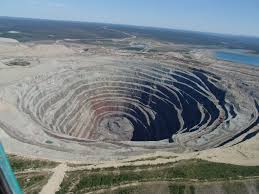
Open pit mine,Udachnaya, Russia--credit Wikimedia


Saturday, September 29, 2018

WHO NEEDS SCIENCE? CERTAINLY NOT TRUMP'S EPA.

The Environmental Protection Agency (EPA) was created in 1970 with the mandate to enforce national environmental protection standards, and to conduct research on pollution in order to strengthen environmental protection and guide policy-making.


 Andrew Wheeler
the smiling face of the new EPA

To coordinate these efforts, the EPA created the Office of Science Advisor. Here's how the EPA's website describes the Science Advisor's role as of 9/28/18:

The Science Advisor works across the Agency to ensure that the highest quality science is better integrated into the Agency's policies and decisions. In this capacity, the Science Advisor leads the OSA and chairs the Agency's Science and Technology Policy Council which reviews selected science issues that have implications across program and regional offices. The mission of the OSA is to provide leadership and serve as an honest broker for cross-Agency science, science policy, and technology issues.

But not for long. The EPA is planning to delete the Office of Science Advisor, ostensibly to "eliminate redundancies" and "combine offices with similar functions." The scientist who has filled the post since 1981, Dr. Jennifer Orme-Zavaleta, is an expert on the effects of chemicals and other risk factors on human and environmental health. Apparently, her expertise is no longer needed at the EPA.

Neither is that of Dr. Ruth Etzel, the head of the Office of Chilren's Health. Dr. Etzel, a specialist in children's diseases and a strong advocate for protecting children from pollutants, was placed on administrative leave, stripped of her ID, email and access to the building, and sent packing.

It's more evidence, if needed, that Trump's EPA, currently headed by Andrew Wheeler, a lawyer and former coal lobbyist, is not all that interested in the kind of inconvenient facts once provided by Drs. Etzel and Orme-Zavaleta. Protecting people and the environment has been pushed to the rear, while deregulating polluting industries has been ushered to the front. The new EPA can now freely focus on Trump's promise to advance the cause of "beautiful, clean coal."*

-----

* That beautiful clean coal produces lots of toxic waste, including neurotoxic mercury. Now the EPA is going to make it easier for polluters to put that into the air you and your children breathe, and the water you drink.

Not to mention radiation. If you believe that a little ionizing radiation is good for you, then today's EPA is the place for you, as they also work to justify reducing radiation protection rules.

And you can now include particulates and ozone; the advisory boards dealing with both of these pollutants are being gutted or disbanded.

You can read more about these anti-science and anti-citizen steps here.

This just in (11/4/18): The EPA's website will no longer discuss climate change. I guess that for Trump's EPA, climate has nothing to do with protecting the environment.

-----

If you enjoyed this post, please sign up to follow or receive email alerts from zerospinzone.

Friday, June 02, 2017

WANT TO SAVE 52,000 AMERICAN LIVES PER YEAR? REPLACE COAL WITH SOLAR!

Burning coal is a dirty business.  A new study makes it clear just how dirty it is, and how many lives could be saved by generating our electricity from the sun instead.

Coal-fired power plant
(CC0 Public Domain)

In research published in the peer-reviewed journal Renewable and Sustainable Energy Reviews, materials engineer Joshua Pearce and energy policy specialist Emily Prehoda quantify the number of American lives lost every year from respiratory, cardiac and other illnesses caused by pollution from burning coal. It turns out to be a shocking 52,000 lives. That's more than the number killed in car crashes (about 35,000 in recent years) and by firearms (around 12,000 per year) combined.

Pearce and Prehoda arrived at their estimate by comparing coal burning and mortality rates geographically. They found a strong correlation between rates of illness and death and proximity to coal-fired electrical plants. On average, they calculated, there's one additional death from the production of 25 million kilowatt-hours of electricity from coal. Across the US, that means that 52,000 people die every year from coal-caused air pollution.

The researchers point out that with current off-the-shelf technologies, we could generate all the electricity we need from the sun. They also examine the potential health risks from manufacturing and transporting solar panels. These turn out to be a minute fraction of the risks from coal.

It's of course true that replacing all the electricity currently generated by burning coal with solar energy would be a costly investment--about $1,000,000 for every life saved.

However, the authors point out, that doesn't count the economic value of the electricity generated. In many regions, solar energy is already cheaper than electricity from coal or other fossil fuels, and the price of solar energy is continuing to fall rapidly. (Note: wind power is even cheaper). When the monetary savings from generating our power from solar rather than coal are factored in, in most cases switching to solar saves money as well as lives.

"Unlike other public health investments, you get more than lives saved," says Pearce. "In addition to saving lives, solar is producing electricity, which has economic value."

The bottom line--the sooner and faster we make the transition from coal and other fossil fuels to solar and other renewable energy sources the better, for our health, our lives, and our pocketbooks.

---

If you liked this post, please subscribe or sign up for email alerts (above right), and let others who might be interested know about zerospinzone.blogspot.com.


Thursday, October 13, 2016

TEN PERCENT OF US HAVE HIGH CONCENTRATIONS OF TEN OR MORE TOXINS IN OUR BLOOD

It's common knowledge that we're all exposed to many different kinds of toxins from the air we breathe, the water we drink, the pesticides and other chemicals we're exposed to and many other sources, and that some of those accumulate and persist in our bodies.


Cycling of POPs. Credit: EUGRIS

What we didn't know but researchers have just discovered, is that at least some of those pollutants are not spread randomly through the population, with some individuals having more of one and others having more of a different one. Much like income or wealth, some people have just a little while some have a lot.

A new study of Persistent Organic Pollutants (POPs)--the first that looked at many different kinds of POPs in the same people at the same time--found that that they were strongly clustered, with more than 10% of the U.S. population carrying ten or more different POPs in their blood at concentrations above the 90th percentile. Blacks, people with low incomes, people with a high body mass index (BMI) and older individuals were more likely to carry heavy loads of multiple organic toxins.


Industrial smokestacks--one source of pollutants
Credit Peter Essick/National Geographic

When I asked physician and epidemiologist Miquel Porta, one of the study's authors, about the implications of his findings, he first cautioned about stirring up fear. "As a physician, I firmly believe that fear is seldom compatible with a broad vision of health," he wrote. 

However, he went on to emphasize that finding that a large number of people have 90th-percentile-or-higher concentrations of 10 or more known toxins needs to be noted by researchers and public health authorities:

"Whatever we know, whatever we think we know about the adverse health effects of a given chemical compound, and about the adverse health effects of several different compounds, simply think that it will not be uncommon for them to be--each and all--present at high concentrations in a significant minority of your patients, constituency, citizens, family or friends. And then think about the plausible negative health effects of the combination or 'cocktail' at high and low concentrations."

As reported in the journal PLOS One, Porta and his colleagues looked at the concentrations of 91 POPs in the blood of 4739 people living in the U.S. They found that 13% of the people studied had 10 or more of the most frequently detected organic pollutants at or above 90th percentile levels. You can view the original article here.

"Decades after the evidence on the presence of toxic chemical mixtures in humans became available, official approaches to assess the risks for human health of such mixtures continue to lag tragically behind scientific evidence of the adverse effects of individual compounds and the potential effects of mixtures," Porta writes.

"We provide a method to improve exposure assessment. Our method is an important complement to what is usually done."

In other words, it's no longer justifiable to study one toxin at a time in one group of people at a time. Now that we know that many different toxins pile up in certain populations, with the odds tilted by race, age, income and other factors, studies, recommendations and regulations that don't take that into account from the start are likely to seriously underestimate the risks to the health of a significant number of people.

-----
You can find a follow-up to this research, detailing some of the health impacts of POPs, here.
-----
If you enjoyed this post, please sign up for email alerts from zerospinzone.blogspot.com (right column above).