Showing posts with label solar. Show all posts

Monday, June 14, 2021

BLOWIN' IN THE WIND--A WHIFF OF GOOD CLIMATE NEWS

Good news is scarce these days, so I'm thrilled to get to report that in the first three months of this year, nearly all--99.7 percent--of new electricity generating capacity in the US came from solar and wind. Once-and-hopefully-never-again King Coal accounted for a measly 0.2 percent of new capacity. 

                                        Wind Farm--Credit USFWS/Joshua Winchell


That brings renewable's percentage of US power generation capacity up to 24.7 percent of the total.

Actual power generation for the first quarter was comparable--21.6 percent of all power generated. March was even better--25.5 percent of the electricity that went into the US grid came from renewables.

Needless to say, the US and the rest of the world need to phase out climate destabilizing energy sources and replace them with renewables as quickly as possible.

-----

These data come from FERC, the Federal Energy Regulatory Commission.

REA/6/14/21, 6/16/21


Friday, May 18, 2018

WHATEVER TRUMP DOES, COAL'S FUTURE IS DARK

At its peak, in 1923, the US coal industry employed 863,000 people, just over two percent of US workers at that time. Today, coal employs just 50,000 workers, less than .04 percent of the current workforce. Despite Trump's claim that his administration has "ended the war on beautiful, clean coal," and will ". . . put our miners back to work," those jobs are no more likely to come back than those of the blacksmiths and farriers who shod the 25 million horses that plowed furrows and pulled wagons in the US a century ago.

The reason is simple: coal is not only dirty, dangerous and a huge source of climate-disrupting greenhouse gases, it can no longer compete economically with oil, natural gas or renewables. Forbes reports that by 2020, power generated by wind farms and large-scale solar installations will market at an incredibly low price of three cents per kilowatt-hour (kWh). Compare that to the 10 to 14 cents per kWh for coal-generated electricity. You don't need an economics degree to foresee the results.

The prediction by Forbes may already be out of date. In early June, 2018, the Central Arizona Project, the agency responsible for pumping water from the Colorado River throughout Arizona, signed an agreement with Origis Energy USA to buy solar power at the incredibly low rate of 2.49 cents per kilowatt-hour, less than one-quarter the going rate for electricity from coal. Seeing the handwriting on the wall, Northern Indiana Public Service Company, which currently generates 65 percent of its electricity from coal, plans to phase coal out completely within ten years. It will replace coal with a mix of solar, wind, energy storage and demand management. Expected savings to consumers--$4 billion over the next three decades.

  
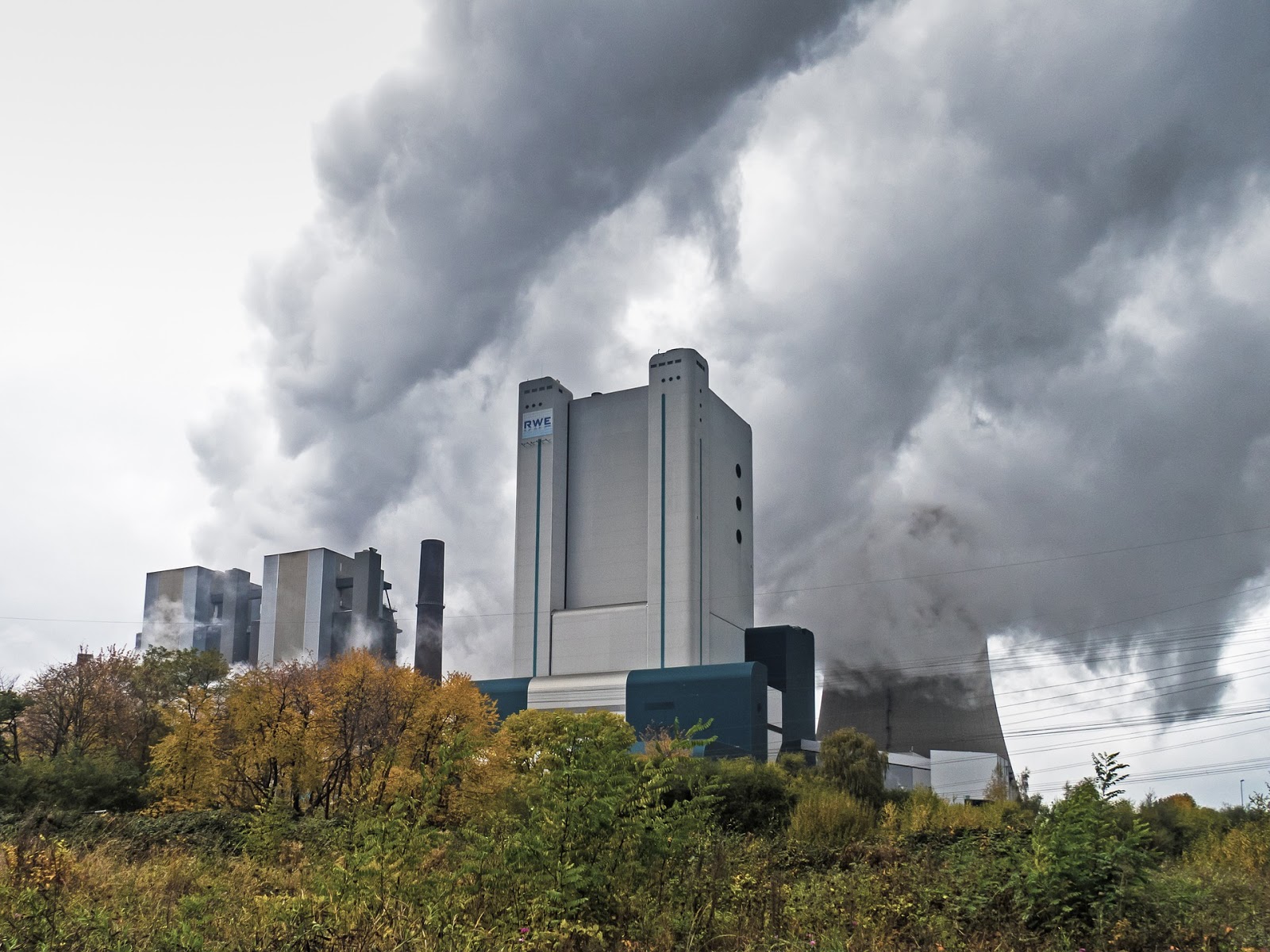
 Four Corners coal generating plant, San Juan, New Mexico

This isn't the case just in the US. According to CleanTechNews, the renewable energy sector employed 10.3 million people worldwide in 2017, adding 500,000 new jobs in the previous year. Large renewable energy projects are currently being bid and contracted at three cents per kWh or less in Dubai, Chile, Abu Dhabi, Mexico and Saudi Arabia. Meanwhile, utilities closed 30 coal-fired plants in 2017 in the US alone, and more in the first months of this year--more than 270 since 2010.

High desert wind farm
Credit: Winchell Joshua, U.S. Fish and Wildlife Service

Hammering one more nail in coal's coffin, on June 13, FERC, the Federal Energy Regulatory Commission, voted unanimously not to approve Trump's attempt to use a law dealing with energy distribution in a national emergency to keep coal and nuclear generating plants on life support.

Sorry, Donald, neither the US nor the rest of the world is going back to "beautiful, clean" coal, no matter how many clean air and clean water regulations you remove.

-----

Update: Here's a link to an article pointing out that in many areas it's now cheaper to get energy from a brand-new wind or solar installation than from an existing coal-powered plant.

And here's another report that 75 percent of existing coal-fired generating plants can no longer compete with renewable power sources.

-----
If you enjoyed this post, please sign up to follow or receive email alerts from zerospinzone.blogspot.com

------


Monday, April 30, 2018

PORTUGAL GENERATES A SURPLUS OF RENEWABLE ENERGY -- WHAT ARE WE WAITING FOR?

Portugal, home to 10 million people, surged to the front of the pack in terms of renewable energy in March of this year. Using a combination of hydro, wind and solar generation, it produced more than enough electricity to power its 3.6 million households, plus businesses, industry and transport. It exported a surplus of 4.8 percent of its electricity--878 gigawatt-hours--to other European countries.

Portugal's use of renewable energy in March kept 1.8 million tons of climate-destabilizing CO2 out of the atmosphere.

Many other countries, including Sweden, Costa Rica and Germany, are moving rapidly towards meeting all or most of their power needs with renewables. You can read about Scotland's successes here.

Portugal's Alto Minho Wind Farm Under Construction
Credit: BBC News

Portugal's per capita Gross Domestic Product (GDP) is $30,300 per year, just about half that of the United States ($59,500). If they can do it, why can't we?

-----------

If you enjoyed this post, please sign up to receive email alerts or to follow zerospinzone.blogspot.com

Sunday, December 31, 2017

SOME GOOD (CLIMATE) NEWS TO FINISH THE YEAR

AUSTRALIA CAN MEET ITS 2030 PARIS CLIMATE PLEDGE FOR FREE

Australia made a bold pledge when it signed the 2015 Paris Climate Agreement -- to cut its greenhouse gas emissions by 26 - 28 percent by 3030. A new study by the Australian National University (ANU) shows that because of the rapidly falling cost of renewable energy, Australia can meet that goal at zero net cost.

 Sundrop Farms, Port Augusta, South Australia
Credit: Sundrop Farms

As anyone who has spent time in Australia knows, the country has abundant solar and wind potential. The ANU researchers note that these renewable energy sources will reach grid parity -- that is, they'll be no more costly than electricity on Australia's current national grid -- by 2020 (and cheaper soon after that). As a result, phasing out existing coal- and gas-fired generating plants and replacing them with renewable sources will actually save money.

Even when the researchers added in the costs of new pumped hydro storage and new long-distance power lines to ensure adequate electricity at night or during low-wind periods, the net cost still turns out to be zero.

Lower level of Tumut 3 Pumped Hydropower Station, NSW, Australia/Credit: CMH at English Wikipedia

“The cost of renewables includes stabilising the electricity grid with energy storage and stronger interstate powerlines to ensure that the grid continues to be reliable,” says Andrew Blakers, at the ANU Research School of Engineering. "Our study shows that we can make the switch to affordable and reliable clean power."

Kudos to Australia for its vision and willingness to move rapidly in this vitally necessary direction. With the cost of renewable energy plummeting worldwide, Australia can serve as a bellwether for the rest of the world.

-----

If you enjoyed this post, please sign up to follow or receive email notices from zerospinzone.blogspot.com.

Friday, December 08, 2017

EUROPE COMMITS TO 100 PERCENT CLEAN ELECTRICITY BY 2050

This is just a quicklink to a remarkable piece of news.

Eurelectric, the body that represents 3,500 of Europe's electric companies, has now committed to carbon-neutral generation of all of Europe's electricity by 2050 or before. They point out that this is a win-win decision, since electricity from wind and solar is rapidly becoming cheaper than electricity generated by burning fossil fuels, and of course pumps far less climate-destabilizing methane and CO2 into the atmosphere.

Wind farm in Romania, 2011
Credit: Sandri Alexandra


Given America's seemingly unbreakable, politically driven addiction to fossil fuels, the reporter's final comment is remarkably restrained:

"It is refreshing to see a regional commitment to clean electricity in Europe. Industry leaders in the US would do well to study the European approach and adjust their thinking accordingly."

Duh!

------

If you enjoyed this post, please sign up to follow or receive email alerts from zerospinzone.blogspot.com.


Sunday, August 20, 2017

SOUTH MIAMI BREAKS FROM CLIMATE DENIAL, MANDATES SOLAR PANELS ON NEW CONSTRUCTION

Here's a quicklink to a Cleantechnia,com story about how South Miami is coming to its senses about global warming, climate change and, especially, the region's risk from rising sea levels and storm surges. It's the first city outside of California to mandate solar panels on all new homes.

Tidal flooding on a sunny day, Miami, 2016
Credit: B137

While our leaders at the federal level continue to march backwards with respect to climate change and its impacts, cities like South Miami and states like California and New York are, of necessity, taking the lead.


Wednesday, June 28, 2017

NO NUKES IS GOOD NUKES--RENEWABLE POWER TOPS NUCLEAR IN THE US FOR THE FIRST TIME


Growing up in the '50s, I remember reading about the great promise of atomic energy. Nuclear reactors, we were told, would produce so much energy so efficiently that electricity would essentially be free--"too cheap to meter," as Lewis Strauss, Chairman of the United States Atomic Energy Commission, said in 1954.

As we know, reality didn't turn out to be quite so rosy. Between cost overruns and delays, opposition supercharged by the 1979 Three Mile Island meltdown, reliability issues, and the still-unsolved problem of what to do with nuclear waste, nuclear power came to be seen as far more problematic than promising. Currently, nuclear plants generate just 20 percent of all electric power in the US, and their share is gradually falling.

Solar power plant
License: CCO Public Domain

In the meantime, clean, renewable sources of energy--especially wind and solar--have been burgeoning. With renewables surging and nuclear flagging, it was inevitable that renewables would eventually win out. The only question was when.

That question has now been answered. According to the US Energy Information Administration, in March and April of this year renewable energy sources produced more energy for the US than nuclear plants--21.6 vs 20.34 percent in March and 22.98 vs 19.19 percent in April.

"Renewable energy is now surpassing nuclear power, a major milestone in the transformation of the US energy sector," says Tim Judson, Executive Director of the Nuclear Information and Resource Service.

And with solar energy growing by 38 percent and wind energy by 14 percent in the last year alone, this extremely positive trend has nowhere to go but up. I, for one, will be delighted when the only signs of out nuclear power misadventure are the silent silos of decommissioned plants.

Signpost memorializing the nuclear accident at Three Mile Island
Credit: The Baltimore Sun
With the cancellation of two planned reactors in South Carolina, just two new nuclear power plants are in the works in the US.  Nuclear energy can no longer compete with wind and solar. The end is in sight.
---

If you enjoyed this post, please sign up for email alerts from zerospinzone, above right.


Friday, June 16, 2017

THE WINDS OF CHANGE--SOLAR AND WIND GENERATE 10 PERCENT OF US ELECTRICITY FOR THE FIRST TIME

Despite the best efforts of President Trump and EPA Administrator Scott Pruitt, the US continues to make progress in renewable energy generation. The national Energy Information Administration (EIA) reports that in March of this year 10 percent of all electricity generated in the US came from wind and solar--a first for the US.

San Gorgonio Pass windfarm
Riverside County, California
Credit: Nandaro

While the US is by no means the leader in the proportion of energy derived from renewable sources, we are adding a great deal of solar, wind and other renewable-energy infrastructure, so we can expect both the amount and percentage of clean, green energy to grow rapidly.

The fundamental reason for this is that large-scale wind and solar energy is now cheaper than electricity from fossil fuels. This is yet another situation where the slogan "follow the money" rings true, or, to put it another way, actual economics trumps Trumponomics.

---

If you enjoyed this post, please subscribe or sign up for email alerts.


Monday, June 05, 2017

GO WIND, YOUNG MEN AND WOMEN

In 1865, American author and editor Horace Greeley cribbed an earlier journalist's phrase and famously wrote, "Go West, young man . . . go West and grow up with the country."

The same advice could certainly be given today with respect not to the long-closed American Frontier, but to the worldwide, opportunity-filled frontier of renewable energy--energy from the wind, the sun, the tides and other natural, non-polluting sources.

Workers prepare to hoist the blades of a giant wind turbine
Credit: National Wind Technology Center/energy.gov

In the first three months of 2017, a new wind turbine was commissioned every 2.4 hours somewhere in the US. Not surprisingly, that kind of growth requires lots of workers. The US wind industry employed 51,000 people in 2013 and doubled to 102,000 just three years later. Writing in Inside Climate News, journalist Paul Horn notes that just the growth in wind-industry employment in those three years equals the total employment in the US coal industry.

Solar energy is another area enjoying explosive employment growth--17 times the national employment growth rate, according to the same source. Solar energy now employs more than 260,000 people in the US, up 82 percent over the past three years.

According to the Environmental and Energy Study Institute, the US renewable energy sector as a whole employed nearly 3.4 million workers at the end of 2016. That's more than all the jobs in the entire fossil-fuel sector, and is grew an astonishing 18 percent between 2015 and 2016.

And all those jobs are producing remarkable results. The US Department of Energy reports that just under 20% of US electricity came from renewables in 2016, pretty much wiping out all predictions.

To borrow a term popularized by Newt Gingrich, it's pathetic to compare renewable energy to the moribund coal industry that President Trump promises to resuscitate. In the US, coal has shed 60,000 jobs over the last five years. (However, and kudos to Trump, it will gain 70 to 100 jobs when the Acosta Coal Mine, in Pennsylvania, opens on June 8. So revise that to minus 59,900.

Business Insider points out that the growth in clean energy in the US is part of a worldwide explosion in renewable energy, a tidal wave of change that now seems inevitable now that the cost of clean renewable energy has fallen below that of polluting, climate-threatening fossil fuels. Even with President Trump and EPA head Pruitt trying to return the US to the carboniferous era, the economics will win out.

Business Insider quotes Liz Delaney, Program Director at EDF Climate Corps, who concludes:

"Our findings would lead us to believe that the right place to invest dollars are in renewable energy rather than fossil fuels," Delaney says. "These jobs are widely geographically distributed, they're high paying, they apply to both manufacturing and professional workers, and there are a lot of them."

-----

If you enjoyed this post, please subscribe or sign up for email notifications (above right) and let friends know about zerospinzone.blogspot.com.

Friday, June 02, 2017

WANT TO SAVE 52,000 AMERICAN LIVES PER YEAR? REPLACE COAL WITH SOLAR!

Burning coal is a dirty business.  A new study makes it clear just how dirty it is, and how many lives could be saved by generating our electricity from the sun instead.

Coal-fired power plant
(CC0 Public Domain)

In research published in the peer-reviewed journal Renewable and Sustainable Energy Reviews, materials engineer Joshua Pearce and energy policy specialist Emily Prehoda quantify the number of American lives lost every year from respiratory, cardiac and other illnesses caused by pollution from burning coal. It turns out to be a shocking 52,000 lives. That's more than the number killed in car crashes (about 35,000 in recent years) and by firearms (around 12,000 per year) combined.

Pearce and Prehoda arrived at their estimate by comparing coal burning and mortality rates geographically. They found a strong correlation between rates of illness and death and proximity to coal-fired electrical plants. On average, they calculated, there's one additional death from the production of 25 million kilowatt-hours of electricity from coal. Across the US, that means that 52,000 people die every year from coal-caused air pollution.

The researchers point out that with current off-the-shelf technologies, we could generate all the electricity we need from the sun. They also examine the potential health risks from manufacturing and transporting solar panels. These turn out to be a minute fraction of the risks from coal.

It's of course true that replacing all the electricity currently generated by burning coal with solar energy would be a costly investment--about $1,000,000 for every life saved.

However, the authors point out, that doesn't count the economic value of the electricity generated. In many regions, solar energy is already cheaper than electricity from coal or other fossil fuels, and the price of solar energy is continuing to fall rapidly. (Note: wind power is even cheaper). When the monetary savings from generating our power from solar rather than coal are factored in, in most cases switching to solar saves money as well as lives.

"Unlike other public health investments, you get more than lives saved," says Pearce. "In addition to saving lives, solar is producing electricity, which has economic value."

The bottom line--the sooner and faster we make the transition from coal and other fossil fuels to solar and other renewable energy sources the better, for our health, our lives, and our pocketbooks.

---

If you liked this post, please subscribe or sign up for email alerts (above right), and let others who might be interested know about zerospinzone.blogspot.com.